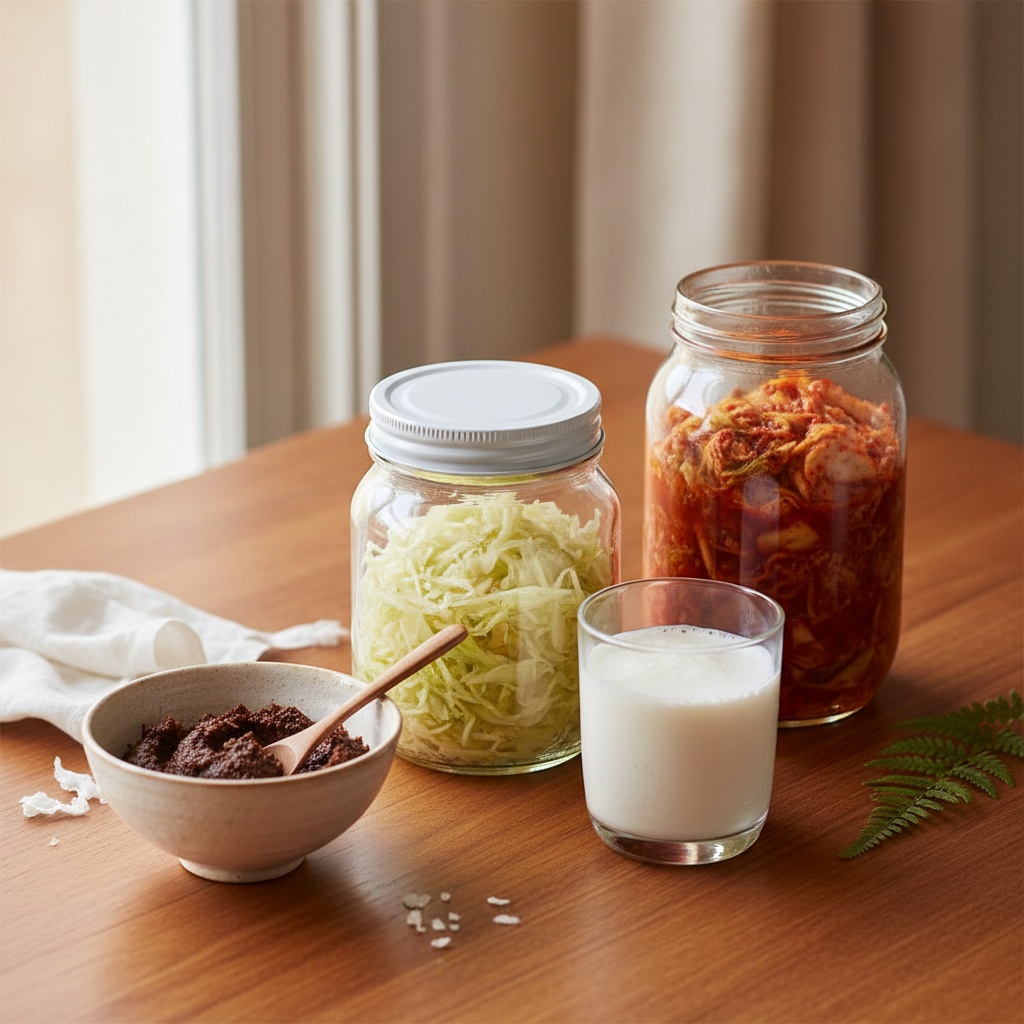
15 Fermented Foods for Gut Health — Which Ones Are Worth Eating
Fermented foods are having a moment. Every wellness blog is telling you to eat kimchi and drink kombucha. But most of those articles don’t tell you the most important thing: not all fermented foods actually survive long enough to help your gut.
Some are gut superstars backed by real research. Others are just sour vegetables with a fancy label. And some of the ones you think are fermented aren’t fermented at all.
Here’s what the science actually says about 15 fermented foods — and which ones are worth your money.
What makes a food “fermented”?
Fermentation is when bacteria or yeast break down sugars in food. This process creates beneficial compounds: organic acids, B vitamins, enzymes, and live microorganisms.
But here’s the catch — the research on fermented foods and gut health is clear on one thing: the benefits come from live cultures, not just the fermentation process. If the bacteria are killed during pasteurization, packaging, or storage, you’re eating a dead food that used to be alive.
A 2022 review in Nutrients found that fermented foods consistently increase microbiome diversity and reduce markers of inflammation — but only when the live cultures are preserved.
A 2019 systematic review confirmed: the health effects of fermented foods depend on the viability of the microorganisms at the time of consumption.
So the question isn’t “is it fermented?” — it’s “are the bacteria still alive when I eat it?”
The 15 fermented foods (ranked by gut health impact)
1. Kefir — the gut health MVP
Kefir is a fermented milk drink that contains up to 61 different strains of bacteria and yeasts. That’s more diversity than almost any other fermented food.
A 2020 study found that kefir consumption significantly increased beneficial Lactobacillus and Bifidobacterium species in the gut within 4 weeks. It also reduced inflammatory markers.
A 2018 review ranked kefir as one of the most potent fermented foods for gut microbiota modulation.
Why it’s #1: More bacterial diversity than yogurt, better survival rate than most fermented foods, and the research is solid. If you eat one fermented food, make it kefir.
How to eat it: Plain, unsweetened kefir. The flavored versions add sugar that feeds bad bacteria. One cup daily.
👉 Women’s Probiotic on Amazon — if you want a backup for days you skip kefir
2. Sauerkraut — the underrated powerhouse
Real sauerkraut (not the pasteurized stuff in jars) is packed with Lactobacillus bacteria. A 2021 study in Cell found that a diet high in fermented foods — including sauerkraut — increased microbiome diversity and decreased 19 inflammatory markers in just 10 weeks.
The key word: unpasteurized. Most sauerkraut on supermarket shelves has been heat-treated, which kills the bacteria. Look for raw sauerkraut in the refrigerated section.
How to eat it: 2-3 tablespoons daily as a side. Don’t cook it — heat kills the cultures.
3. Kimchi — the Korean gut fix
Kimchi is fermented vegetables (usually napa cabbage) with chili, garlic, and ginger. It contains Lactobacillus kimchii — a strain unique to kimchi that’s particularly effective at reducing gut inflammation.
A 2023 review found that kimchi consumption improved gut barrier function and reduced symptoms of irritable bowel syndrome. The combination of fiber, probiotics, and anti-inflammatory compounds (garlic, ginger) makes it a triple threat.
How to eat it: As a side dish, in rice bowls, or straight from the jar. One to two tablespoons daily.
4. Yogurt — the classic (but read the label)
Yogurt is the most widely consumed fermented food in the world. It contains Lactobacillus bulgaricus and Streptococcus thermophilus — the two strains required by law to be in yogurt.
But most commercial yogurts are loaded with sugar, which feeds harmful bacteria and negates the probiotic benefit. And some brands pasteurize after fermentation, killing the cultures.
What to look for: “Live and active cultures” on the label. No added sugar. Greek yogurt has more protein but the same probiotic content as regular.
How to eat it: Plain Greek yogurt with berries. One cup daily.
5. Miso — the Japanese secret
Miso is fermented soybean paste used in Japanese cooking for centuries. It contains Aspergillus oryzae — a beneficial fungus that supports digestion and nutrient absorption.
A 2024 review in Foods found that miso consumption was associated with reduced risk of certain cancers and improved gut immune function. The fermentation process also produces isoflavones — compounds that support hormonal balance.
Important: Don’t boil miso. Add it to warm (not boiling) water or soup. Heat above 115°F kills the beneficial organisms.
How to eat it: Miso soup with warm water. One tablespoon of paste daily.
6. Tempeh — the protein-packed ferment
Tempeh is fermented soybeans formed into a cake. Unlike tofu, tempeh is fermented — which means it contains beneficial bacteria and is easier to digest.
The fermentation process breaks down phytic acid — an antinutrient in soy that blocks mineral absorption. This means the iron, zinc, and calcium in tempeh are more bioavailable than in unfermented soy.
How to eat it: Marinated and pan-fried, in sandwiches, or crumbled into stir-fries. 100g daily.
7. Kombucha — the trendy one (with caveats)
Kombucha is fermented tea. It contains a mix of bacteria and yeasts, plus organic acids and B vitamins.
Here’s the problem: most commercial kombucha has been pasteurized or contains so much sugar that it’s basically soda with a probiotic label. The live cultures may or may not survive bottling.
A 2019 review noted that kombucha has potential gut health benefits, but the evidence is weaker than for kefir or sauerkraut because of the variability in commercial products.
What to look for: Raw, unpasteurized, less than 5g sugar per serving. Or make your own.
How to drink it: One small glass (150ml) daily. Don’t overdo it — the acids can erode tooth enamel.
8. Pickles (fermented, not vinegar)
Real pickles are fermented in saltwater brine — not vinegar. The difference matters. Vinegar pickles have no live cultures. Saltwater-fermented pickles are full of Lactobacillus.
Look for pickles in the refrigerated section labeled “naturally fermented” or “live cultures.” The shelf-stable ones in vinegar are just sour cucumbers.
How to eat them: One or two as a snack or side. Watch the sodium.
9. Natto — the Japanese superfood most people skip
Natto is fermented soybeans with a sticky, stringy texture and strong flavor. It’s not for everyone — but it’s one of the most potent fermented foods in existence.
Natto contains Bacillus subtilis — a bacterium that produces nattokinase, an enzyme that supports cardiovascular health by breaking down fibrin (a protein involved in blood clotting).
A 2023 study found that natto consumption was associated with improved gut microbiome composition and reduced inflammation markers.
How to eat it: Over rice with soy sauce and mustard. Start with a small amount — the texture takes getting used to.
10. Apple cider vinegar (with the mother)
The “mother” in raw apple cider vinegar is a colony of bacteria and yeast — technically a fermented product. But the research on ACV and gut health is weaker than people think.
A 2024 review found that ACV may support digestion and blood sugar regulation, but the probiotic content is minimal compared to kefir or sauerkraut.
The verdict: ACV is fine, but don’t rely on it as your primary fermented food. It’s more of a digestive aid than a probiotic source.
How to use it: 1-2 tablespoons diluted in water before meals.
11. Kvass — the Eastern European gut tonic
Kvass is a fermented beverage made from rye bread or beets. It contains Lactobacillus and is popular in Russia and Eastern Europe.
Less researched than kefir or kimchi, but traditional use and emerging studies suggest it supports digestion and gut microbiome diversity.
How to drink it: One small glass daily. Look for raw, unpasteurized versions.
12. Sourdough bread — the misunderstood ferment
Sourdough is fermented — but the baking process kills the bacteria. So why is it on this list?
Because the fermentation process breaks down gluten and phytic acid, making sourdough easier to digest and more nutritious than regular bread. The prebiotic compounds created during fermentation also feed your existing gut bacteria.
A 2022 review found that sourdough fermentation improves mineral bioavailability and reduces the glycemic response compared to conventional bread.
The verdict: Sourdough won’t add new bacteria to your gut. But it’s easier on your gut than regular bread and feeds the bacteria you already have.
How to eat it: As your regular bread. Choose real sourdough (long fermentation) over “sourdough-flavored” bread.
13. Coconut yogurt — the dairy-free option
Coconut yogurt made with live cultures is a good dairy-free alternative. But most brands add thickeners, sugars, and stabilizers that can irritate the gut.
What to look for: Short ingredient list (coconut, cultures, that’s it). Live and active cultures on the label.
How to eat it: Plain, with berries. Check the sugar content — some brands have 15g+ per serving.
14. Fish sauce (traditional, fermented)
Traditional fish sauce is fermented for 12-24 months. It contains amino acids, minerals, and trace amounts of beneficial bacteria. Used in Southeast Asian cooking for centuries.
Not a probiotic powerhouse, but the fermentation process creates umami compounds that support digestion and nutrient absorption.
How to use it: As a seasoning in cooking. Not a primary probiotic source.
15. Water kefir — the lighter option
Water kefir is kefir made with sugar water instead of milk. It contains fewer bacterial strains than dairy kefir (around 10-15 vs. 61), but it’s a good dairy-free option.
How to drink it: As a kombucha alternative. One glass daily.
The bottom line: what’s actually worth eating?
If you’re only going to eat three fermented foods:
- Kefir — the most diverse, the most researched, the most effective
- Sauerkraut (raw, unpasteurized) — cheap, easy, powerful
- Kimchi — anti-inflammatory compounds + probiotics + fiber
Everything else is bonus. Kombucha is fine if you find a good brand. Yogurt is fine if it’s plain and unsweetened. The rest are good additions but not essential.
The biggest mistake people make: eating fermented foods that have been pasteurized. If the bacteria are dead, it’s not a probiotic food anymore. It’s just a sour food.
Read the label. Look for “live cultures.” Keep it refrigerated. Don’t cook it.
Your gut will thank you in about 4 weeks.
Coming soon
- BPC-157: The gut healing peptide your doctor won’t mention
- Your gut bacteria are running your hormones — the estrobolome explained
- Probiotics vs fermented foods: which one actually works better?
This post contains affiliate links. If you purchase through these links, I may earn a small commission at no extra cost to you.
👉 Women’s Probiotic on Amazon
👉 Turmeric Probiotic on Amazon
FTC Disclosure: This post contains affiliate links. If you purchase through these links, I may earn a small commission at no extra cost to you. I only recommend products I’ve researched and believe in.
References
Leeuwendaal NK et al. “Fermented Foods, Health and the Gut Microbiome.” Nutrients. 2022;14(7):1527. PubMed
Dimidi E et al. “Fermented Foods: Definitions and Characteristics, Impact on the Gut Microbiota and Effects on Gastrointestinal Health and Disease.” Nutrients. 2019;11(8):1806. PubMed
Wastyk HC et al. “Gut-microbiota-targeted diets modulate human immune status.” Cell. 2021;184(16):4137-4153.e14. PubMed
Pyo Y et al. “Probiotic Functions in Fermented Foods: Anti-Viral, Immunomodulatory, and Anti-Cancer Benefits.” Foods. 2024;13(15):2400. PubMed
Balasubramanian R et al. “Fermented foods: Harnessing their potential to modulate the microbiota-gut-brain axis for mental health.” Neurosci Biobehav Rev. 2024;158:105562. PubMed
Kok CR et al. “Yogurt and other fermented foods as sources of health-promoting bacteria.” Nutr Rev. 2018;76(S1):4-15. PubMed
Eroğlu FE et al. “Effect of fermented foods on some neurological diseases, microbiota, behaviors: mini review.” Crit Rev Food Sci Nutr. 2023;63(27):8753-8766. PubMed
Marco ML et al. “Health benefits of fermented foods: microbiota and beyond.” Curr Opin Biotechnol. 2017;44:94-102. PubMed